EV-Rated Outlet Installation for Level 2 Home Charging in La Jolla
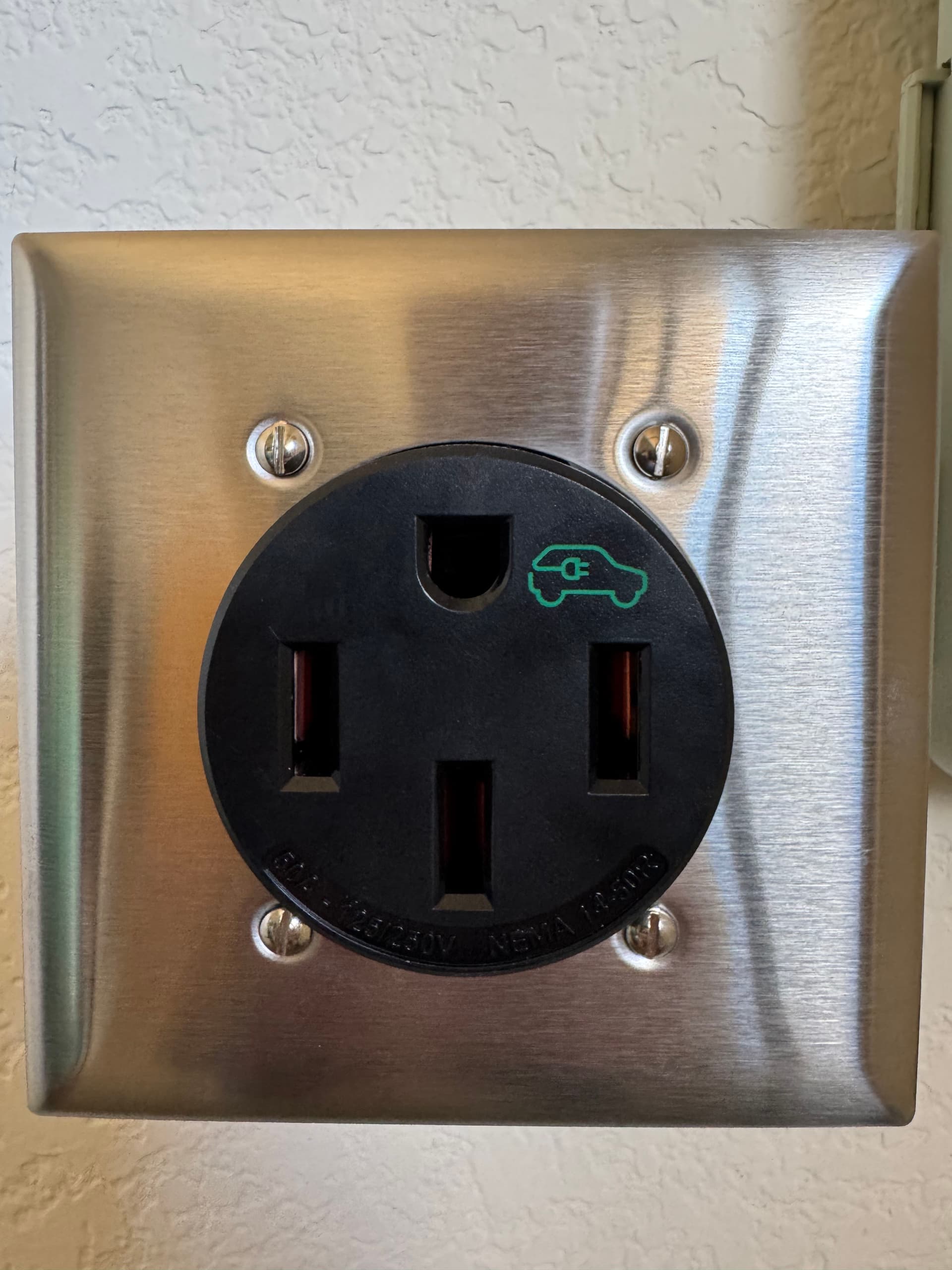
Most people setting up Level 2 charging at home go straight for a standard NEMA 14-50 outlet and call it a day. Makes sense - it fits the plug, it works. But there's a meaningful difference between a standard 14-50 and one that's actually rated for EV use. That little green EV symbol on the outlet face isn't just a sticker. It means the receptacle is built to handle the repeated high-heat cycles that come with charging a car every single night.
A standard outlet is tested for occasional heavy loads. An EV-rated outlet is designed for continuous, sustained draw - the kind your charger pulls for hours at a time, day after day. Over time, that distinction matters for both safety and longevity. We always recommend going with the EV-rated option when we're running a dedicated circuit, and that's exactly what we did on this La Jolla install.
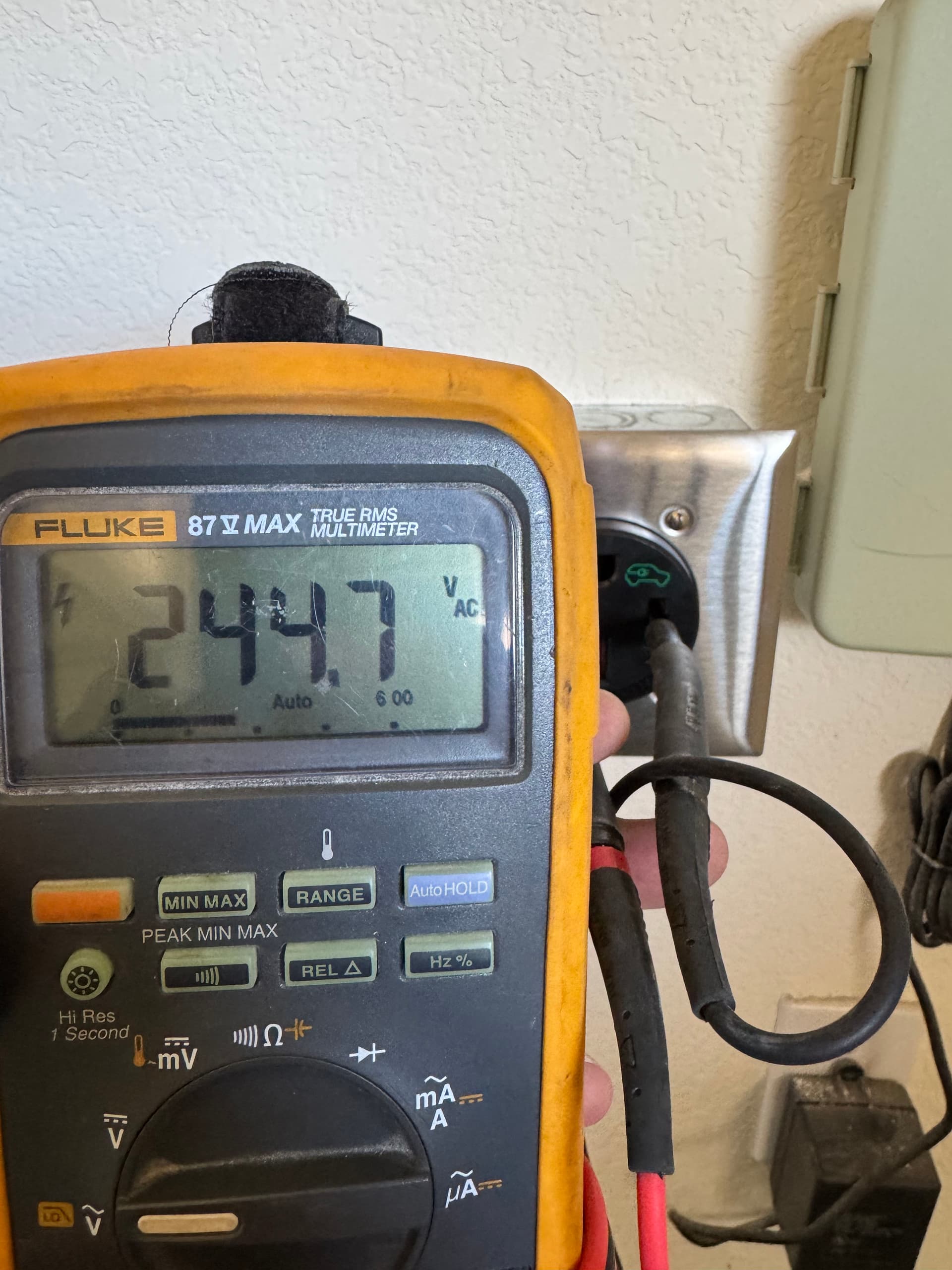
We ran the full setup here - dedicated circuit, properly sized breaker, new wiring, and the EV-rated outlet mounted clean on a stainless steel cover plate. Before wrapping up, we verified the circuit with a Fluke 87V True RMS multimeter, which showed a solid 244.7 volts AC at the outlet. That's right in the sweet spot for reliable Level 2 charging performance.
The detail work matters on these installs. A loose connection or undersized wire on an EV circuit isn't just an inconvenience - it's a fire hazard. Getting the breaker sizing, wire gauge, and outlet rating all dialed in correctly from the start is what separates a safe, lasting installation from one that creates problems down the road.
If you're thinking about adding Level 2 charging at home, it's worth doing it right the first time. That means a dedicated circuit - not a shared one - and hardware that's actually built for the job.