Backyard Barrel Sauna Gets a Safe Dedicated Circuit Install
A backyard sauna is a serious luxury upgrade - but it only works safely if the electrical side is done right. Saunas pull a heavy load, and running one off an existing circuit is a recipe for tripped breakers at best and a fire hazard at worst. That's exactly why this job called for a dedicated circuit from the ground up.
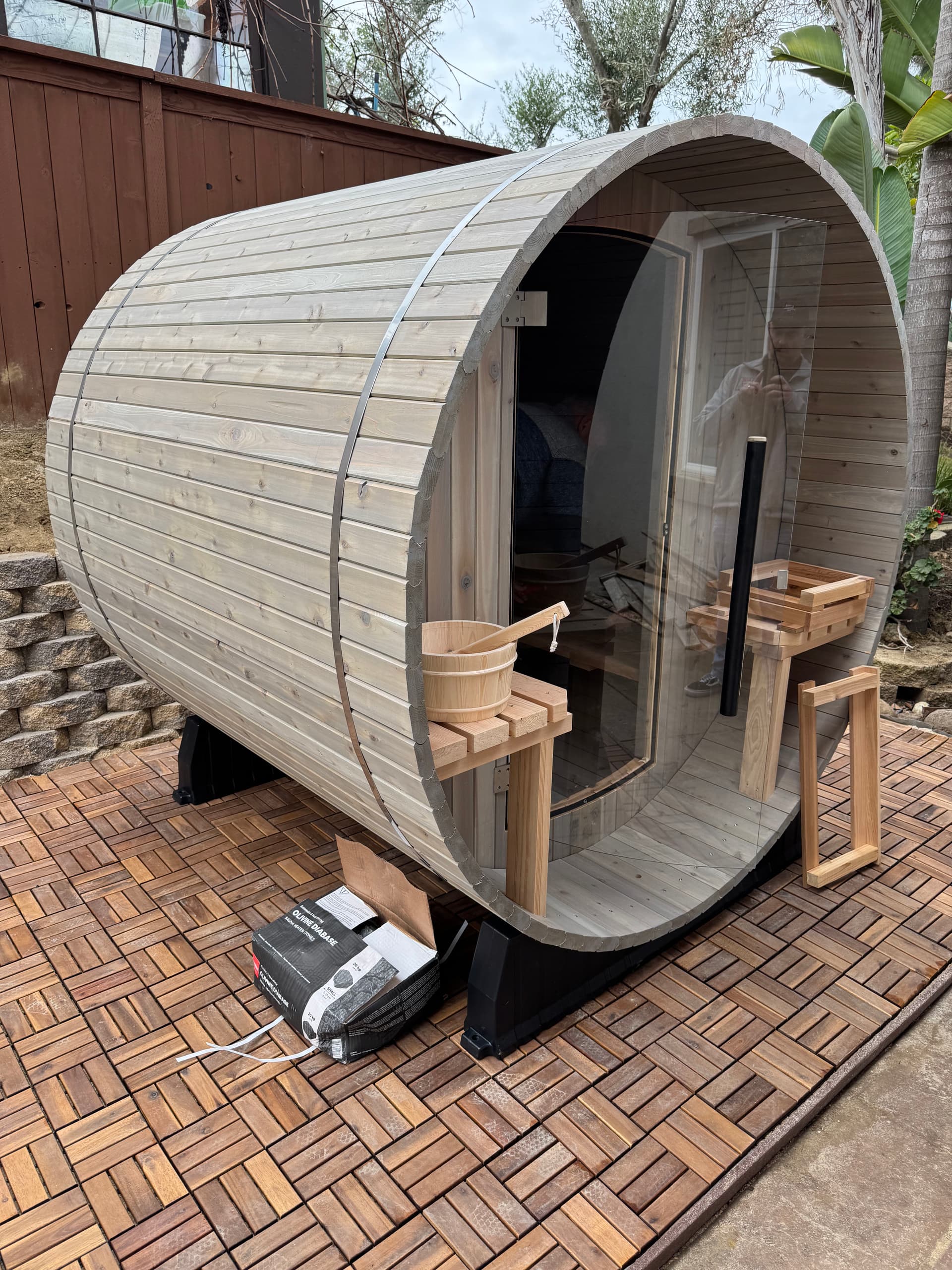
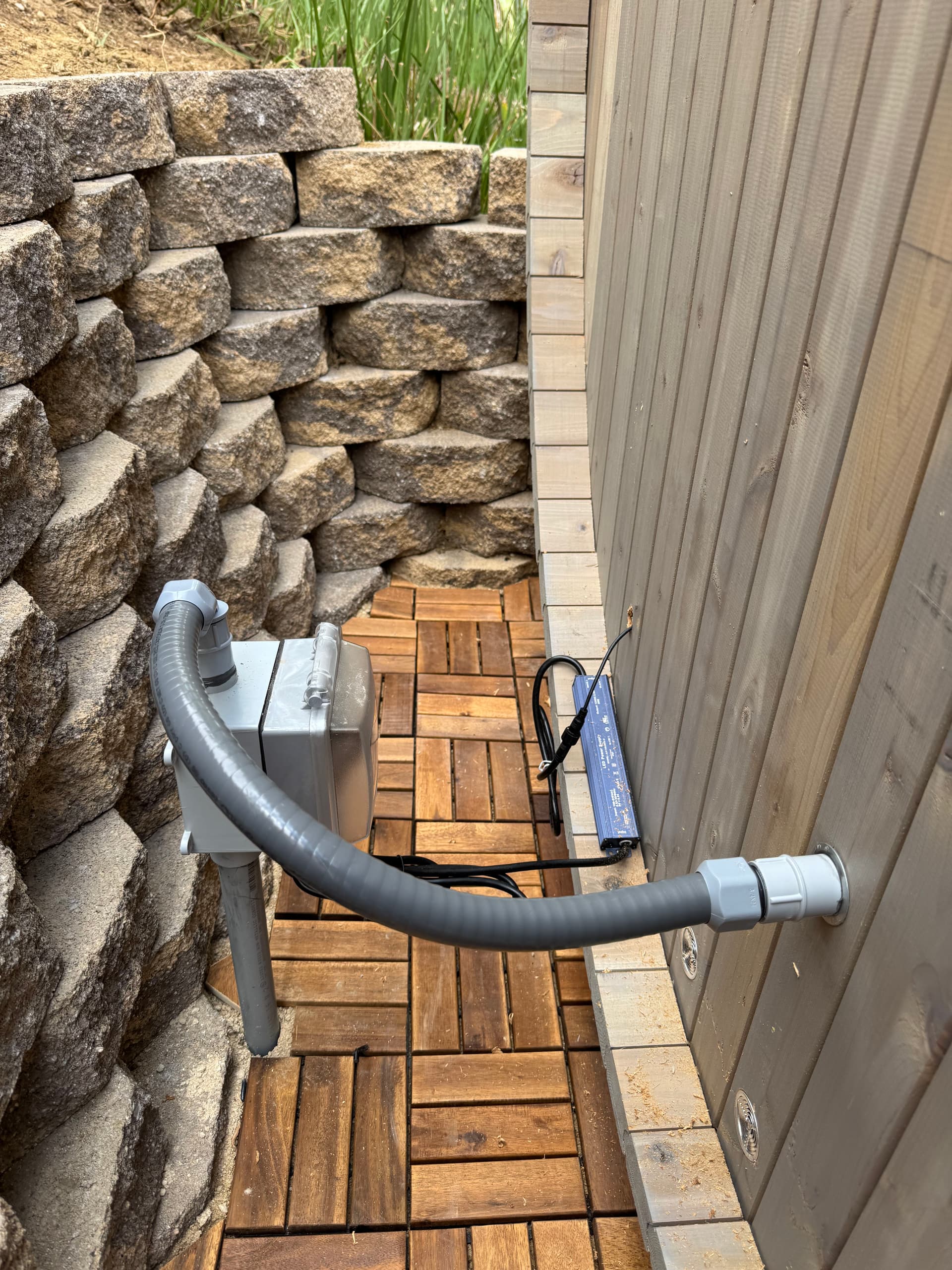
Here's what we were working with - a brand new barrel sauna installed in the backyard, ready to be wired. We ran a new dedicated circuit to feed the unit, then installed a secondary disconnect on the exterior of the sauna. That disconnect is a critical piece. It gives the homeowner - or any first responder - an immediate way to cut power to the unit without going back to the main panel. For high-heat equipment like this, it's not optional in our book.
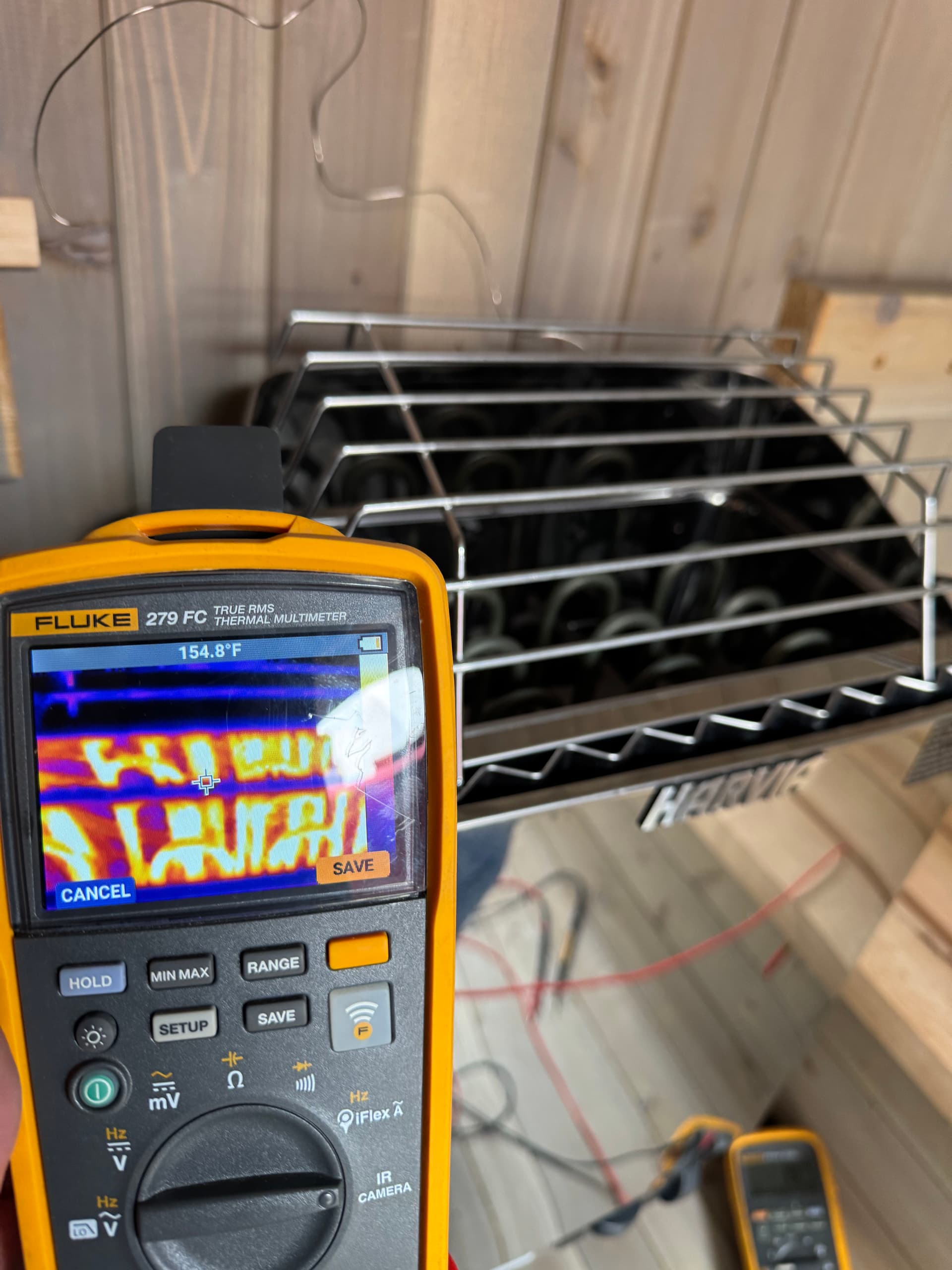
We also installed and tested the Harvia heater inside the unit. The testing step is where a lot of people cut corners, and it's the part we take seriously. We used a Fluke thermal multimeter with a built-in IR camera to verify the heater was drawing properly and distributing heat evenly. Seeing 154.8°F on that thermal read during startup tells us the connections are solid and the unit is performing exactly as it should.
The secondary disconnect box mounted to the sauna exterior feeds through flexible conduit directly into the unit - clean, weatherproof, and built to last outdoors. No loose wiring, no shortcuts. Just a setup the homeowner can trust every time they step in.
Sauna electrical work isn't something to hand off to just anyone. It requires a real understanding of load calculations, proper disconnecting means, and safe heater wiring. This one checked every box - and now the owner gets to actually enjoy it.